

Measures of Success · Mark Graban
Stop reacting to noise.
Start responding to signals.
Make better decisions with your metrics—and spend less time explaining changes that don’t matter.
Try the ideas before you buy. Registration required for the free PDF.
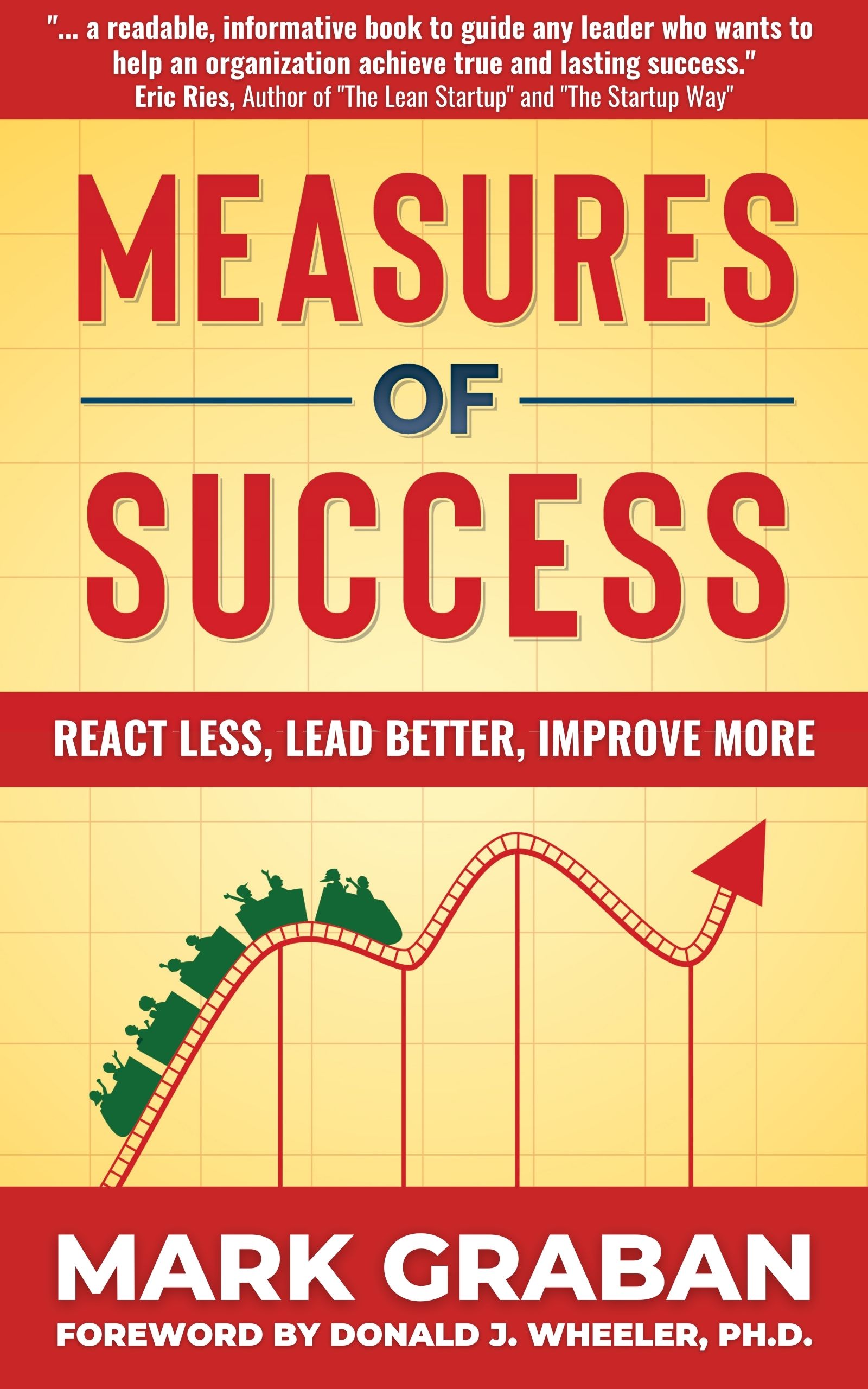
Practical methods. Real examples.
No statistics background required.
A better question for your next meeting
Did performance change—or did the number just move?
A metric goes up. Then down. A meeting gets called. Explanations and action items follow.
But routine variation doesn’t always need a reaction. Measures of Success shows you how Process Behavior Charts help separate noise from signals worth investigating.
Explore the three core questions →Context changes the conversation.
React less. Lead better. Improve more.
Give your team a better way to use data.
Know when to act.
Distinguish routine ups and downs from changes that deserve your attention.
Ask better questions.
Move beyond red and green dashboards to understand how your system performs.
See whether it worked.
Evaluate changes over time instead of declaring victory after one good month.
What readers and leaders say
“Measures of Success provides leaders with a blueprint for separating signal from noise, and focusing resources on lasting improvement.”Zeynep Ton · Author, The Good Jobs Strategy
“a readable, informative book to guide any leader who wants to help an organization achieve true and lasting success.”Eric Ries · Author, The Lean Startup
Excerpt from his endorsement

Meet the author
Hi. I’m Mark Graban.
I’ve spent more than two decades helping leaders in healthcare, manufacturing, and technology improve their work. I kept seeing smart, well-intentioned people reacting to noise and calling it improvement. This book offers a better way.
More about Mark →Also by Mark: Lean Hospitals, Healthcare Kaizen, The Mistakes That Make Us, and the upcoming The Silence Tax.
A few questions before you start
Do I need a statistics background?
No. The book walks you through the method step by step, with examples that connect the charts to everyday leadership decisions.
Is this only for healthcare?
No. The approach applies wherever teams use metrics to understand performance, including manufacturing, software, startups, and government.
Can we use this together as a team?
Yes. Build a shared way to discuss performance. Explore bulk book orders, workshops, and templates and resources.
Start with one chapter. Bring a better question.
Make your next metrics meeting more useful.
Get a feel for the approach, then choose the format that works for you.
Free PDF with registration · Print and eBook buying options